The Magical Faery Horse of St. John’s Wort
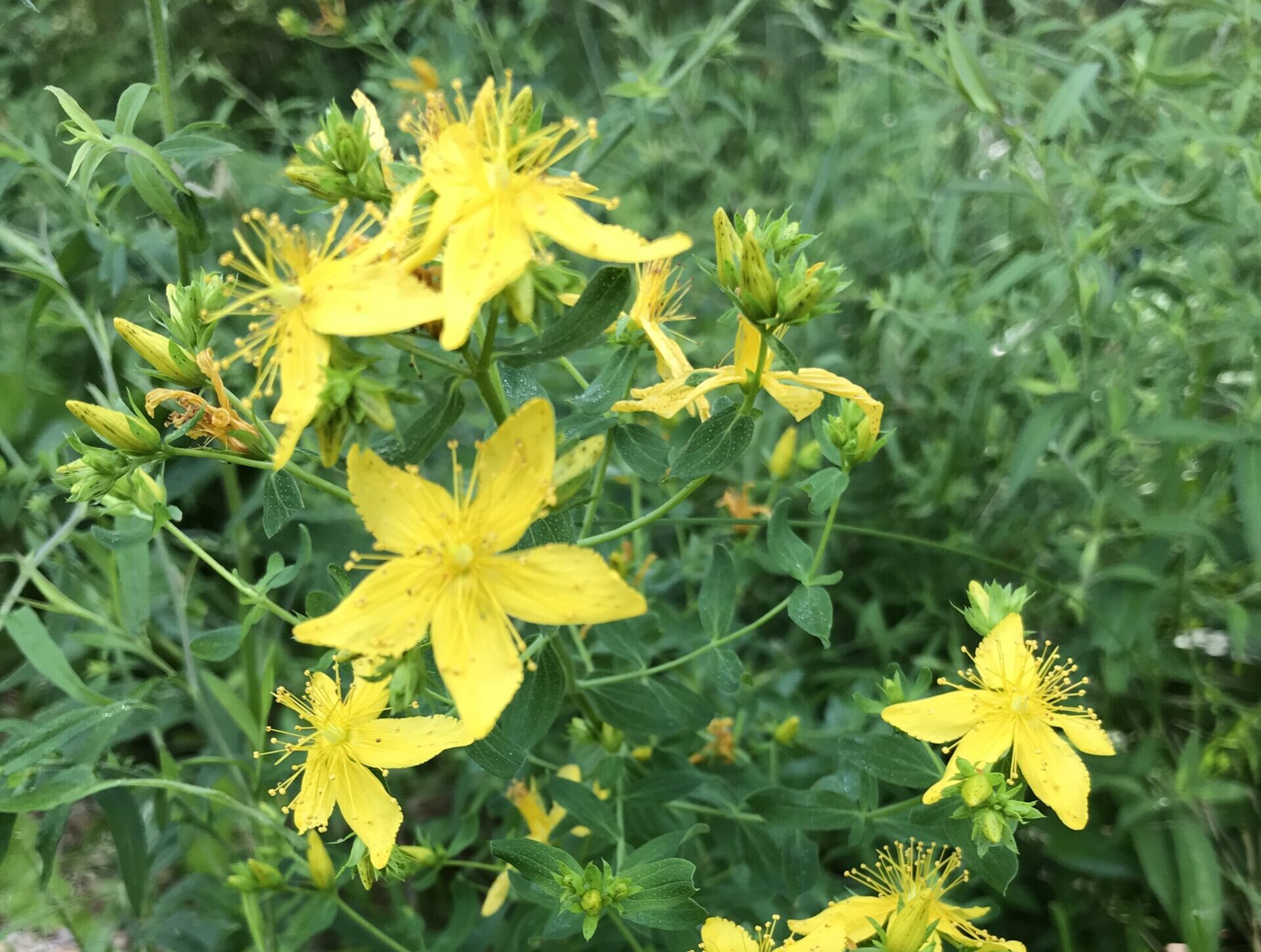
St. John’s wort (Hypericum perforatum) is also known as Penny-John, rosin rose, and hexenkraut, “witches’ herb.” It’s also known as a faery horse, but more on that later. St. John’s wort is a small, shrubby plant with bright yellow star-shaped flowers. The flowers and buds ooze a red liquid when squeezed or bruised.
In Ireland, St. John’s wort ranked as one of the seven magical herbs that nothing natural or supernatural could injure. Throughout Europe, it was used to drive away evil spirits and demons. In Scotland and England, St. John’s wort was used as a charm to ward off witches and enchantment. Although in Scotland it reputedly deterred second sight, it was also believed that a person could acquire second sight by combining the juice of St. John’s wort, dill, and vervain into an ointment that was applied to the eyelids for three consecutive days.
Although the plant was sometimes used as an amulet against faeries, it was also believed to be a plant protected by them. According to legend, faeries held a great feast on Midsummer’s Eve during which they danced around St. John’s wort plants and splashed them with cowslip wine. The reason for this practice is unknown.
Like ragwort, faery horses were said to use St. John’s wort as a daytime disguise. Stepping on the plant after sunset reputedly caused the horse to rear up and gallop off with the unsuspecting human on its back. At dawn a person would be left far from home with a sprig of leaves in their hands.
For magical use, the pungent smoke of a few burning leaves is effective for preparing outdoor ritual space. Grow St. John’s wort at the front of your house or hang a sprig of leaves on your front door to repel negativity and to invite abundance into your home. Of course, it will also be an invitation for faeries.
For more about faeries and plants, you may want to check out my book Magical Faery Plants.